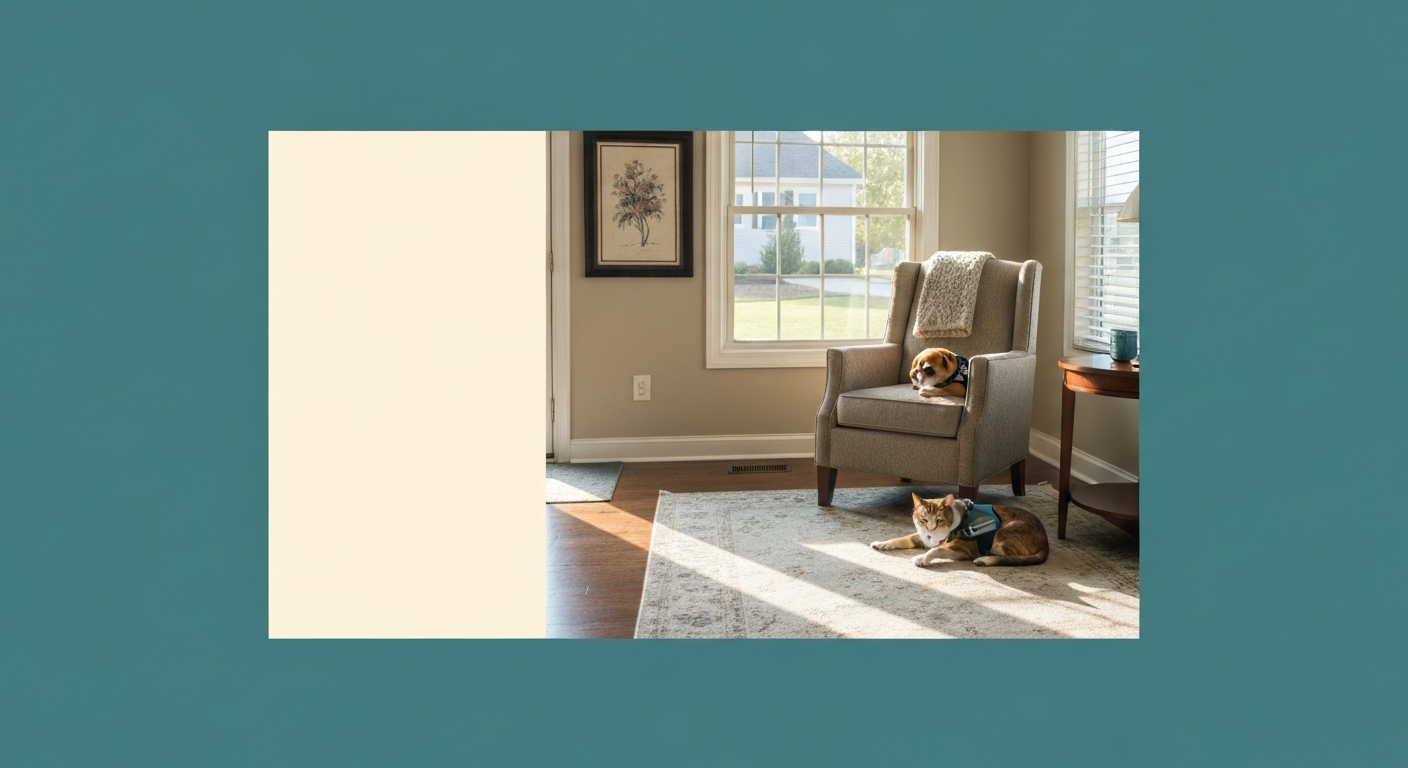
Best Emotional Support Animals for Arkansas Apartments — A Clinician-Vetted Lineup
Finding the right emotional support animal for your Arkansas apartment is a deeply personal decision — one that sits at the intersection of your mental health needs, your living situation, and a nuanced federal and state legal framework. Under HUD's FHEO-2020-01 guidance (Assessing a Person's Request to Have an Animal as a Reasonable Accommodation Under the Fair Housing Act), housing providers covered by the Fair Housing Act are generally required to grant reasonable accommodations for emotional support animals when a resident holds a valid ESA letter issued by a licensed mental health professional (LMHP) — even in buildings with strict no-pet policies or breed restrictions.
What makes an ESA letter valid in Arkansas? State law requires that the issuing clinician hold an active Arkansas license and — critically — that a minimum 30-day established therapeutic relationship exist between the clinician and the client before the letter is issued. This is not a bureaucratic formality; it is a statutory protection designed to ensure that ESA documentation reflects genuine clinical judgment rather than a rubber-stamp transaction. When you receive your letter through ESA Letter Arkansas, that relationship requirement is fully observed and documented, giving your accommodation request the legal standing it deserves.
The list below is curated with apartment living specifically in mind — space constraints, noise sensitivity, common-area etiquette, and the practical realities of shared-wall living in Little Rock, Fayetteville, Fort Smith, Jonesboro, and every corner of the Natural State. A licensed clinician will ultimately determine whether an ESA is therapeutically appropriate for your situation, but this guide gives you the information you need to have that conversation thoughtfully. Read on for nine clinician-vetted picks, practical takeaways for each, and the legal scaffolding that protects your housing rights.
Important Disclaimer: This article is for informational purposes only and does not constitute medical, mental-health, or legal advice. Only a licensed Arkansas mental health professional can determine whether an emotional support animal is therapeutically appropriate for your individual circumstances. For housing disputes involving your ESA rights, please consult an Arkansas-licensed attorney or contact your local legal aid office. Always review Arkansas-specific rules with a qualified clinician before pursuing an ESA letter.
Why Apartment-Friendliness Matters for ESA Selection
Not every animal that provides genuine emotional support is ideally suited to apartment life. A large, high-energy breed in a 650-square-foot unit without a yard can create stress for both animal and owner — the opposite of therapeutic. When evaluating the best ESA for an apartment in Arkansas, clinicians and residents alike should weigh four practical dimensions: size and space requirements, noise profile (crucial in shared-wall buildings), socialization needs, and maintenance demands relative to the resident's current capacity.
It is equally important to remember that while the Fair Housing Act protects your right to keep an ESA in most rental housing, landlords may still request documentation, and that documentation must come from an LMHP who is licensed in Arkansas and has maintained the required therapeutic relationship with you. Online "ESA registries," laminated ID cards, and national certification databases are not recognized by HUD and will not protect your housing rights. The only document that carries legal weight is a properly drafted ESA letter from a credentialed Arkansas clinician — an LCSW, LMFT, LPC, psychologist, or psychiatrist, among other qualifying professionals. For a detailed walkthrough of the letter process and your FHA protections, see our guide to Arkansas ESA housing letters and FHA accommodation rights.
The Clinician-Vetted Lineup: 9 Best ESAs for Arkansas Apartments
1. Dogs (Small to Medium Breeds)
Dogs remain the most commonly prescribed emotional support animals, and with good reason. The human-canine bond is among the most thoroughly studied in the clinical literature; regular tactile interaction, routine-building around walks, and the unconditional social engagement dogs provide can be meaningfully supportive for individuals managing anxiety, depression, PTSD, and other qualifying mental health conditions. For apartment living specifically, size matters enormously. Small to medium breeds — think Cavalier King Charles Spaniels, Shih Tzus, French Bulldogs, Pugs, and similarly compact companions — adapt far more comfortably to limited square footage and are less likely to alarm neighbors with booming barks.
In Arkansas apartment communities, breed restrictions are a common source of tension. It is worth noting that under HUD's FHEO-2020-01 guidance, breed and weight restrictions that a housing provider applies to pets do not automatically apply to ESAs; each accommodation request should be evaluated individually. However, this does not mean blanket approval is guaranteed — a landlord may still deny a request if the specific animal poses a direct threat or causes an undue hardship, and reasonable conditions may be negotiated. A well-socialized, crate-trained dog is significantly easier to advocate for in these discussions. For clinically informed breed recommendations and training strategies, explore our dedicated resource on ESA dogs in Arkansas — best breeds for apartments.
Training is not legally required for ESAs the way it is for service animals, but a dog with foundational manners — loose-leash walking, quiet commands, reliable recall — makes shared-building life genuinely smoother and strengthens your landlord relationship. See our overview of ESA training basics in Arkansas for practical starting points.
Practical Takeaway: Choose a breed with a low-to-moderate energy profile and a quiet temperament. Invest in basic obedience early. Your ESA letter from an Arkansas-licensed clinician will document the therapeutic necessity; a well-mannered dog makes the practical case for itself.
2. Cats
Cats are arguably the single most apartment-adapted ESA option available. They are inherently low-maintenance relative to dogs, require no outdoor walking, produce minimal noise, and their calm, self-sufficient presence can be profoundly grounding for individuals who find the demands of a high-interaction animal overwhelming. For residents managing social anxiety, agoraphobia, or conditions that make structured outdoor routines difficult, the independence of a cat can align remarkably well with what a therapeutic relationship with an animal realistically needs to look like day-to-day.
In Arkansas apartments — particularly in dense urban rental markets like the Hillcrest neighborhood of Little Rock or the Dickson Street corridor in Fayetteville — cats represent the path of least resistance from a property management standpoint. Even landlords who enforce strict no-pet policies are generally familiar with the FHA framework around ESAs, and a well-documented request supported by a legitimate Arkansas ESA letter rarely meets sustained resistance when the animal in question is a single, indoor, neutered cat. Breeds with notably calm dispositions — Ragdolls, British Shorthairs, Scottish Folds, and Maine Coons — are worth discussing with your clinician if you are evaluating fit.
A common misconception is that any cat qualifies automatically and that documentation is optional. It does not and it is not. Your housing accommodation rests entirely on that licensed-clinician-issued letter, and attempting to present an online registry certificate in its place may result in denial and damaged trust with your housing provider. For a deeper look at cat-specific ESA considerations in Arkansas, our guide to ESA cats in Arkansas — quiet companions covers breed selection, veterinary records, and letter requirements in detail.
Practical Takeaway: An indoor, spayed or neutered cat with current vaccinations and routine veterinary care is among the easiest ESAs to accommodate in Arkansas apartment settings. Pair your animal with a properly issued ESA letter, and the legal framework works in your favor.
3. Rabbits
Rabbits occupy a genuinely underappreciated niche in the ESA conversation. They are quiet — producing essentially no disruptive noise — clean when properly litter-trained, and form affectionate bonds with their owners that, while different in character from dogs or cats, can be meaningfully therapeutic. For individuals who find the unpredictability of higher-energy animals anxiety-provoking, the calm, gentle rhythm of a rabbit's presence — their soft weight when held, their quiet companionship during still moments — may offer precisely the regulated sensory experience their mental health care calls for.
From a purely logistical standpoint, rabbits are excellent Arkansas apartment-friendly ESAs. They require no outdoor access, produce no noise audible through shared walls, and their space needs, while real (rabbits should not be confined to small hutches permanently), can be met with a modest exercise pen in even a studio apartment. Landlords who are unfamiliar with rabbits as ESAs sometimes express surprise, but HUD's FHEO-2020-01 guidance is not species-specific; it applies broadly to animals that a licensed clinician has determined provide emotional support to a person with a qualifying disability. The letter is the mechanism, and the species question is secondary to its clinical legitimacy.
Diet, housing enrichment, and veterinary care for rabbits do require some research — they are not low-care animals simply because they are quiet. Exotic or rabbit-specialist veterinarians are available in larger Arkansas markets, and this relationship should be established promptly after adoption. For a comprehensive resource on rabbit ESAs in the state, see our article on rabbits as emotional support animals in Arkansas.
Practical Takeaway: Rabbits are among the quietest and most apartment-compatible ESA options available. Secure your Arkansas ESA letter, establish a veterinary relationship, and be prepared to briefly educate property managers unfamiliar with rabbit ESAs — the legal framework is firmly on your side.
4. Guinea Pigs
Guinea pigs share much of the practical appeal of rabbits while offering their own distinct therapeutic qualities. They are social, gentle, and highly responsive to their owners — many individuals find the sensory experience of holding and interacting with a guinea pig deeply calming, making them a meaningful choice for those managing anxiety or stress-related conditions. Their characteristic quiet vocalizations are endearing rather than disruptive, and their small size makes them one of the most space-efficient ESA options available in Arkansas apartments of any configuration.
One clinically relevant consideration: guinea pigs are highly social animals and generally thrive in pairs. Keeping a bonded pair, while slightly more demanding in terms of space and veterinary cost, typically results in healthier, more emotionally stable animals — which in turn provides a more consistent therapeutic presence. A distressed or lonely guinea pig is not the same therapeutic resource as a contented, socially fulfilled one. Discuss this nuance with both your clinician and your veterinarian when planning your ESA arrangement.
As with all ESAs, the accommodation rests on your licensed Arkansas clinician's letter, not on the species itself. Guinea pigs do not require any special certification beyond that letter, and online registries or "exotic pet ESA certificates" add no legal value and may actually undermine your credibility with a housing provider. Keep your documentation clean, current, and clinician-issued.
Practical Takeaway: A bonded pair of well-socialized guinea pigs in a properly sized enclosure represents an excellent, low-noise, apartment-friendly ESA option. Budget for routine exotic-vet care and keep your Arkansas ESA letter current and clinician-signed.
5. Birds (Small Companion Species)
The therapeutic literature on human-bird bonds is smaller than that on dogs or cats, but it is meaningful — particularly for individuals who benefit from routine, structured interaction, and the cognitive engagement of teaching and communication. Smaller companion birds, such as budgerigars (parakeets), cockatiels, and lovebirds, can offer genuine emotional support with a modest physical footprint. Their presence — the soft ambient sounds of a contented bird, the ritual of morning feeding, the reciprocal recognition that develops over time — can be grounding in ways that complement formal therapeutic treatment.
Noise is a legitimate consideration for apartment living. Cockatiels, for instance, can produce moderate vocalizations during active periods, and some individual birds develop louder habits than others. For shared-wall apartments, budgerigars tend to be the quieter option, and their gentle chatter is unlikely to generate neighbor complaints. Larger parrots — macaws, cockatoos, African greys — while undeniably intelligent and bonding animals, produce noise levels that are genuinely incompatible with most multi-unit residential settings and are not well-suited as apartment ESAs regardless of their therapeutic value for a given individual.
Your Arkansas ESA letter from a licensed clinician documents the therapeutic rationale for your bird, not its species-specific characteristics. When presenting your accommodation request to a housing provider, pairing your letter with evidence of responsible ownership — a proper cage setup, a veterinary relationship with an avian vet, and a quiet, well-cared-for animal — builds the strongest possible case.
Practical Takeaway: Budgerigars and cockatiels are the most apartment-compatible companion birds for Arkansas ESA purposes. Avoid large parrot species in multi-unit settings. Your licensed Arkansas clinician's letter is your legal foundation — the bird's good behavior and visible veterinary care strengthen it practically.
6. Hamsters and Gerbils
For individuals in smaller Arkansas apartments — studios, micro-units, or single-room situations — hamsters and gerbils represent a genuinely practical ESA option with a meaningful therapeutic profile. The tactile experience of handling a small rodent, the calm of watching their purposeful activity, and the routine of care can all serve therapeutic functions, particularly for individuals managing loneliness, mild depression, or anxiety. These animals require minimal space, produce no noise audible outside a single room, and their care demands are manageable for people at varying levels of executive function.
A clinical reality worth noting: hamsters are largely nocturnal, meaning their peak activity — including wheel-running — occurs overnight. For light sleepers, this can occasionally disrupt sleep quality, which is worth discussing openly with your clinician when evaluating fit. Gerbils, which are more diurnally active and highly social within same-sex pairs, may be a better option for some residents. Neither species requires outdoor access, veterinary care is generally affordable, and their presence is entirely undetectable to neighboring units.
As with all species on this list, the legal instrument that protects your housing rights is your Arkansas-licensed clinician's ESA letter — not a registry card, a certificate, or a colored vest. Housing providers occasionally attempt to restrict ESAs to "traditional" pets; HUD's FHEO-2020-01 guidance does not support such categorical exclusions, and a properly documented accommodation request for a hamster or gerbil carries the same legal standing as one for a dog or cat.
Practical Takeaway: Hamsters and gerbils are ideal for micro-apartments or situations where space and noise constraints are paramount. Discuss nocturnal activity with your clinician when assessing fit. Your valid Arkansas ESA letter is the only documentation your housing provider is legally entitled to require.
7. Fish
Fish may seem like an unconventional ESA choice, but research into the psychological effects of aquarium-watching is surprisingly robust — studies have associated it with reductions in heart rate, blood pressure, and self-reported anxiety. For individuals for whom sensory overwhelm, hypervigilance, or stress-related physiological arousal is a primary concern, a well-maintained aquarium can provide a genuinely therapeutic environmental anchor. The slow, fluid movement of fish, the ambient sound of filtered water, and the visual complexity of a planted tank engage the parasympathetic nervous system in ways that clinical literature increasingly recognizes as meaningful.
From a purely apartment-compatibility standpoint, fish are essentially frictionless. They produce no noise, require no outdoor access, pose no risk to neighbors or common areas, and are unlikely to trigger any housing provider concern regardless of no-pet policy language. A standard aquarium of 10 to 30 gallons is manageable in most Arkansas apartments, though larger tanks should account for floor load-bearing capacity — something worth mentioning to your property manager proactively rather than reactively.
It is worth acknowledging that the ESA framework is most straightforwardly applicable to animals that provide direct interaction-based emotional support; fish are not interactive in the same way as mammals. A licensed Arkansas clinician should assess whether the specific therapeutic mechanism — in this case, primarily ambient observation — is clinically meaningful for your particular situation. If the answer is yes, the accommodation framework applies, and your ESA letter from that clinician is your documentation.
Practical Takeaway: For residents whose therapeutic needs center on sensory regulation and ambient calm, a well-maintained aquarium can be a clinically valid ESA option. Discuss the specific mechanism with your Arkansas-licensed clinician and ensure your letter clearly articulates the therapeutic rationale.
8. Ferrets
Ferrets occupy a unique position on this list — they are highly interactive, playful, and personality-rich animals that form strong bonds with their owners, but they also carry specific husbandry requirements and temperament considerations that make a thoughtful clinician-guided discussion essential before pursuing this option. For individuals who benefit therapeutically from an active, engaging companion that demands presence and playfulness — and who find that kind of energized interaction helpful for mood regulation — ferrets can be an excellent fit.
The practical apartment considerations for ferrets center on two areas: odor management and escape-proofing. Ferrets have a natural musky scent that, while manageable with regular cage cleaning and appropriate diet, is perceptible in enclosed spaces. A proactive conversation with your property manager — ideally accompanied by your ESA letter and a commitment to specific cleaning protocols — is strongly advisable before the animal arrives. Ferrets are also extraordinarily effective escape artists; apartment ferret-proofing requires attention to gaps, vents, and low furniture cavities that a casual pet owner might overlook.
In Arkansas, ferrets are legal to own, though some municipalities may have local ordinances worth verifying. As with all ESAs, the accommodation is grounded in your clinician-issued letter, not in the animal's species or any registry documentation. A licensed Arkansas LMHP who knows your clinical history and has maintained the required 30-day therapeutic relationship with you is the appropriate person to assess and document this choice.
Practical Takeaway: Ferrets are a strong fit for engaged, hands-on owners whose therapeutic needs align with active, interactive companionship. Address odor and containment proactively with your landlord. Your Arkansas ESA letter from a licensed clinician is your legal protection — have it ready and clearly documented.
9. Miniature Pigs
Miniature pigs — correctly sourced from reputable breeders, not the misleadingly marketed "teacup" pigs, which are simply underfed standard pigs — have gained genuine clinical traction as ESA companions for individuals who respond strongly to highly intelligent, emotionally attuned animals. Pigs are among the most cognitively complex domesticated species; their capacity for learned behavior, their responsiveness to human interaction, and their social intelligence can make them deeply engaging therapeutic companions for the right individual.
For Arkansas apartment living specifically, miniature pigs present real practical challenges that require honest evaluation. Even responsibly bred miniature varieties can reach 50 to 150 pounds at maturity — not a small animal in a one-bedroom apartment. They require enrichment, rooting opportunities, and social interaction that can be difficult to provide in a limited living space. Their needs are closer in scope to a medium-sized dog than to a cat or rabbit, and the accommodation request process with a housing provider may face greater scrutiny. Landlords may invoke the "undue hardship" or "fundamental alteration" provisions of HUD's guidance, and while these claims must be evaluated individually rather than categorically, they are not frivolous in the context of a large, active animal in a multi-unit building.
That said, for the right resident — someone with adequate space, commitment to enrichment, and a clinical picture in which this specific type of companionship is therapeutically indicated — a miniature pig ESA in an Arkansas apartment can be legitimate, documented, and legally protected. The key is a thorough clinical conversation with your Arkansas-licensed mental health professional and transparent, proactive communication with your housing provider well before the animal arrives.
Practical Takeaway: Miniature pigs are a high-commitment, high-complexity ESA option best suited to residents with larger apartments and significant animal-care experience. Verify mature size with your breeder, discuss candidly with your clinician, and engage your housing provider early with your Arkansas ESA letter in hand.
The Legal Foundation: What Makes an Arkansas ESA Letter Valid
Across all nine options above, one constant holds: your housing protections are only as strong as your documentation. Under Arkansas state law, a valid ESA letter must be issued by a licensed mental health professional — an LCSW, LPC, LMFT, psychologist, or psychiatrist — who holds an active Arkansas license and who has maintained a genuine, documented therapeutic relationship with you for a minimum of 30 days prior to issuing the letter. This 30-day requirement is not a technicality; it is a statutory safeguard designed to ensure that ESA documentation reflects real clinical judgment, and housing providers and courts are increasingly familiar with it.
Letters purchased from online registries — the $40-and-a-questionnaire variety that deliver a laminated certificate and an ID card — carry no legal weight under HUD's FHEO-2020-01 framework and have been explicitly identified by HUD as illegitimate. Presenting one to a sophisticated housing provider or in a legal proceeding may actually harm your credibility. The ESA Letter Arkansas process is built on the opposite foundation: a real clinical relationship with a real Arkansas-licensed clinician, resulting in documentation that can withstand scrutiny. For a full explanation of FHA accommodation rights and the letter process, see our in-depth guide to Arkansas ESA housing letters and FHA protections.
A Note on Air Travel
One question that arises frequently: can your ESA travel with you in an aircraft cabin? The short answer, as of 2021, is no. The U.S. Department of Transportation revised its Air Carrier Access Act regulations to remove ESAs from covered accommodations; airlines now treat emotional support animals as standard pets, subject to carrier pet policies and applicable fees. If in-cabin air travel with an animal is a significant need for your mental health care, the appropriate path is a Psychiatric Service Dog (PSD) — an animal individually trained to perform specific tasks related to a psychiatric disability, which continues to receive ACAA protections. A licensed Arkansas clinician can help you evaluate whether that pathway is appropriate for your situation.
How to Get Started
If you believe an emotional support animal may be therapeutically beneficial for your mental health, the right first step is a consultation with a licensed Arkansas mental health professional. That relationship — not a website form, not a registry, not a certificate — is the foundation of everything that follows. A qualified clinician will assess your individual circumstances, determine whether an ESA is therapeutically appropriate, and, following the required 30-day therapeutic relationship, issue documentation that genuinely protects your housing rights under the Fair Housing Act.
ESA Letter Arkansas connects Arkansas residents with licensed, in-state mental health professionals who understand both the clinical dimensions of ESA assessment and the specific legal requirements of Arkansas state law. Every letter we facilitate is issued by a credentialed Arkansas clinician following an authentic therapeutic relationship — because that is what the law requires, and because you deserve documentation that actually works when it matters most.
For housing accommodation guidance and letter requirements, visit our resource on Arkansas ESA housing letters and FHA rights. For species-specific guidance, explore our dedicated articles on ESA dogs in Arkansas, ESA cats in Arkansas, and rabbits as ESAs in Arkansas.
" } ```Disclaimer: The information in this article is provided for educational and informational purposes only. It does not constitute medical, mental-health, or legal advice and should not be relied upon as such. Only a licensed Arkansas mental health professional can evaluate your individual circumstances and determine whether an emotional support animal is clinically appropriate for you. For housing disputes or questions about your rights under the Fair Housing Act, please consult an Arkansas-licensed attorney or contact your local legal aid organization. Arkansas law requires a minimum 30-day established therapeutic relationship between you and your clinician before an ESA letter may be issued; no legitimate provider can circumvent this requirement.
Ready to start your Arkansas ESA letter?
Licensed Arkansas clinician review. Compliant with state law.
Get My Arkansas ESA Letter